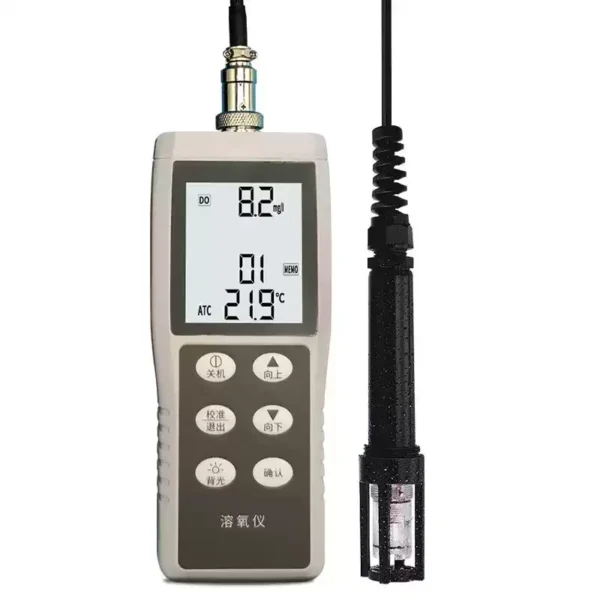
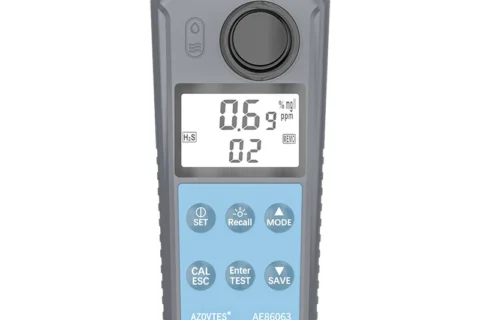
Dissolved Oxygen Meter
Dissolved Oxygen Meter — helps with oxygen deficiency, fish gasping.
- Solves
- Oxygen deficiency, fish gasping
- Best for
- Fish farms, koi ponds
- Price range
- $300–$1600
Recommended for these conditions
Roughly nine out of ten disease calls trace back to a water-quality slip you could have caught early. Dissolved Oxygen Meter turns invisible problems into a number you can act on.
Where it really pays for itself is oxygen deficiency, fish gasping. That is the exact failure point behind several of the conditions in our library, so addressing it directly shortens treatment time and cuts re-infection.
How to use it well
Low DO accelerates gill disease progression. Treat it as part of a protocol rather than a magic bullet — it works best alongside good husbandry and the medications matched to your specific diagnosis.
Conditions it helps with
On our disease pages you’ll see this equipment recommended for conditions such as:
- Branchiomycosis
- Gill Flukes
- EUS
Who it’s for
Best suited to fish farms, koi ponds. Typical units run in the $40–$300 range, depending on capacity and features. Use the inquiry form below to ask about a specific model, request a recommendation for your system size, or get notified when stock and pricing are confirmed.
Care & Usage Tips
Setup & Calibration
- Calibrate in air-saturated water or humid air before first use
Most DO probes are calibrated at 100% saturation — either by exposing the probe to water-saturated air or in water vigorously aerated for 10 minutes. Calibrate at the same temperature as your tank water for best accuracy. - Account for altitude and salinity corrections
Oxygen saturation at sea level at 77°F (25°C) is ~8.2 mg/L. At 5,000 ft elevation it drops to ~7.0 mg/L, and in full marine salinity it’s ~6.8 mg/L. Enter your altitude and salinity before calibrating for accurate absolute readings. - Keep the probe membrane away from tank walls and substrate
The DO probe needs water movement across its surface to avoid a false low reading directly at the sensor tip. Position the probe in a flow path or gently stir before recording a measurement. - Allow 3–5 minutes for a stable reading after immersion
The electrochemical reaction takes time to equilibrate after immersion. Moving the probe from air to water will produce a drifting reading for the first few minutes. Wait for the display to stabilize before recording. - Know your target DO levels by system type
Minimum safe DO: coldwater salmonids ≥ 7 mg/L; tropical freshwater ≥ 5 mg/L; marine ≥ 6 mg/L. Below 4 mg/L, most fish enter behavioral stress; below 2 mg/L, mortality begins within hours. (Ref: Boyd & Tucker, Pond Aquaculture Water Quality Management, 1998)
Operational Care
- Replace the probe membrane every 3–6 months
The permeable membrane on a Clark-type probe degrades from chemical exposure, protein fouling, and mechanical abrasion. A stretched, discolored, or slow-to-respond probe membrane needs replacement regardless of how new the meter is. - Rinse with DI water and store with the membrane cap on
Salt and mineral deposits crystallize on a bare membrane and create micro-perforations that flood the electrolyte reservoir. Always cap the probe when not in use and store in a cool, dry location away from direct light. - Increase aeration before adding any medication
Many fish medications reduce the water’s oxygen-carrying capacity or increase fish oxygen demand through gill irritation. Boost aeration to 130–150% of normal before and during any chemical treatment. - Log DO alongside temperature and feeding times
Dissolved oxygen drops sharply after feeding as bacterial decomposition consumes oxygen. In aquaculture systems, the pre-dawn DO reading is the most critical safety metric — log it daily. - Cross-check with the Winkler titration method annually
The Winkler titration is the gold standard for DO measurement and does not drift like electrochemical probes. An annual cross-check validates your electronic probe’s accuracy and catches membrane or electrolyte degradation.
Frequently asked questions
What does Dissolved Oxygen Meter do?
The Dissolved Oxygen Meter helps control oxygen deficiency, fish gasping — common triggers behind fish disease.
What conditions does Dissolved Oxygen Meter help with?
Dissolved Oxygen Meter is recommended for conditions such as Branchiomycosis (Gill Rot), Ceratomyxosis, Epizootic Hematopoietic Necrosis (EHN), Epizootic Ulcerative Syndrome (EUS), and Gill and Skin Flukes (Dactylogyrus & Gyrodactylus). Each linked disease page lists the full set of gear that helps.
Who is Dissolved Oxygen Meter for?
Dissolved Oxygen Meter is a good fit for fish farms, koi ponds. It works for both prevention and active treatment.
How much does Dissolved Oxygen Meter cost?
Dissolved Oxygen Meter typically costs in the $300–$1600 range, depending on capacity, build quality, and features. Use the inquiry form on this page for a recommendation and current pricing.
How do you use Dissolved Oxygen Meter?
Low DO accelerates gill disease progression. Treat it as part of a protocol rather than a magic bullet — it works best alongside good husbandry and the medications matched to your specific diagnosis.
What should you know about Operational Care?
Replace the probe membrane every 3–6 monthsThe permeable membrane on a Clark-type probe degrades from chemical exposure, protein fouling, and mechanical abrasion. A stretched, discolored, or slow-to-respond probe membrane needs replacement regardless of how new the meter is.
Inquiry form
Request info on this equipment
Ask about a specific model, request a recommendation for your system size, or get notified on pricing and availability.
Related equipment

Water Testing
Salinity Meter / Refractometer
Marine fish stress, coral disease
from $80–$160
View details →
Water Testing
Nitrite / Nitrate Test Kit
Nitrogen cycle imbalance, chronic stress
from $200–$500
View details →