Freshwater Tropical · Marine / Saltwater
Hole-in-the-Head Disease (Hexamita)
Parasite (flagellated protozoan) disease of aquarium fish. Key signs: pinhole-sized pits on head that enlarge into cavities; lesions along lateral line.
Severity: Moderate
Hole-in-the-Head Disease is one of those conditions that catches keepers off guard — by the time you’ve spotted it, the clock is already running.
This page is the working reference I’d hand a keeper who just walked up and said “something’s wrong with my fish.” No medical school jargon, just what you need to act.
The fast version, for keepers who want context before reading further:
- Pathogen. Hexamita spp., Spironucleus spp. (with often secondary nutritional/environmental factors) (Parasite (flagellated protozoan))
- Typical hosts. Cichlids especially (discus, oscars, angelfish), gouramis, some marine species
- Reported distribution. Worldwide in ornamental fish
- Temperature window. Any tropical aquarium temperature
- WOAH-listed (notifiable). No
- Reference image datasets. CuraPeces (class: Holes in the head)
How to spot it before it spreads
Symptoms tend to appear in a fairly consistent order, even if the timing varies. Watch for:
- Pinhole-sized pits on head that enlarge into cavities. A change worth noting and timing — write down when it first appeared.
- Lesions along lateral line. A change worth noting and timing — write down when it first appeared.
- Pale, stringy or yellow faeces. A change worth noting and timing — write down when it first appeared.
- Weight loss. A change worth noting and timing — write down when it first appeared.
- Sometimes anorexia. A change worth noting and timing — write down when it first appeared.
Observation discipline:
Pick one fish at a time and watch only that fish for 60 seconds. The temptation is to scan the whole tank looking for problems — that’s how you miss the subtle ones. One fish, full attention, then move to the next. The whole-tank scan is for triage; the per-fish look is for diagnosis.
Two signs in the same fish is suggestive. Three is a working diagnosis. Don’t wait for the full set before you act.
Getting a useful photo
The phone-photo trick: don’t trust your memory of what the fish looked like. Take a series of shots once a day. Disease progression often hides in a comparison you couldn’t do from recall.
What to capture:
- A wide shot of the whole fish from the side (use a black background card behind the glass if you have one).
- A tight macro shot of any visible lesion, fin damage, or color anomaly.
- A shot of the gills if you can briefly lift an operculum.
- A shot of behavior — yes, video is fine. Lethargy and erratic swimming are diagnostic in their own right.
Even a basic phone camera with steady hands and good light beats a fancy DSLR on autofocus through agitated water. Patience over equipment.
Treating the infection
Action items, in priority order:
Isolate the affected fish. A bare-bottom hospital tank — heater, sponge filter pre-cycled, no substrate, no decor — lets you medicate at proper dosing without nuking the display’s biofilter or invertebrates. The hospital tank needs to match the display in temperature and parameters; sudden changes are an additional stressor the sick fish can’t afford.
Confirm the diagnosis before you medicate. Photo the symptoms (see the photo tip section), compare against reference images, and run the case through the Symptom Checker. Picking the wrong treatment class is worse than waiting an extra 12 hours to confirm. Don’t medicate blind.
Specific treatment. Metronidazole (often in food at 50 mg/kg for 5–7 days) is mainstay; improve diet (high-quality varied food, vitamin supplementation); large water changes; address any electrical interference
Test the water on the source tank. Even after moving the fish out, your display almost certainly has an underlying parameter issue that enabled the disease in the first place. Test ammonia, nitrite, nitrate, pH, and (where applicable) salinity, KH, and temperature. Fix what you find before reintroducing anything.
Do a 25% water change on the display. Not 50% — that’s a parameter shock to the remaining fish. 25% with temperature-matched, dechlorinated water, then test again 12 hours later.
Quarantine new fish for a minimum of 4 weeks. During an active outbreak, don’t add anything to the system. Adding a new fish into a sick tank is committing it to the same exposure with zero protection.
Track everything. A simple notebook entry per day — date, observations, treatment dose, water-test numbers — pays off if you need to consult a vet or if the same issue recurs in 6 months. Memory is unreliable here; written records aren’t.
If you found this article in panic mode — meaning you’re staring at a sick fish right now — do these three things first, in this order:
1. Take a photo. Multiple angles. Both the lesion and the whole fish. 2. Test the water. Ammonia and nitrite at zero is non-negotiable. If either is above zero, that’s an active emergency on its own. 3. Set up the hospital tank. Even if you’re not 100% sure yet, having it ready buys you time when the diagnosis firms up.
Background on the agent
Hole-in-the-head disease is caused by Hexamita spp., Spironucleus spp. (with often secondary nutritional/environmental factors), a parasite (flagellated protozoan) in the Diplomonadida.
Knowing what’s actually doing the damage is what lets you pick the right medication on the first try, rather than burning through a string of failed treatments while the fish gets worse.
Being parasitic, this organism has a life cycle — usually with several stages, only some of which are vulnerable to treatment. That’s why most antiparasitic protocols require multiple doses 4–7 days apart: you’re targeting successive waves of the susceptible stage as eggs hatch or trophonts release. Stopping treatment after the visible parasites disappear means you’ve only killed the current generation; the next batch hatches in days.
Susceptible species: primarily Cichlids especially (discus, oscars, angelfish), gouramis, some marine species. Different species within the same family show different vulnerability — even closely related fish can have wildly different clinical outcomes from the same pathogen. If you keep mixed species, observe each one independently; the apparently-healthy one may simply be a quieter carrier.
Where it comes from
Knowing the route in helps you cut it off.
Direct via cysts in water and faeces; favoured by poor diet, stray voltage, activated-carbon-induced trace-element deficiency.
The implication for keepers with multiple tanks is direct: dedicated nets, dedicated siphons, dedicated buckets per system. Color-code them.
Tank context that matters
Disease is rarely a coincidence. Almost every outbreak I’ve watched first-hand was preceded by a measurable shift in the tank — temperature, parameters, stocking, or stress. Look back at the last 14 days:
- New fish in the last 4 weeks. The single most common trigger, by a margin. If you skipped quarantine, this is your most likely vector.
- Recent temperature swing. A 3 °C / 5 °F change in either direction stresses the immune system enough to enable opportunistic pathogens.
- Ammonia or nitrite reading above zero. Even brief spikes damage gill tissue and open the door for secondary infection.
- Filter maintenance event. A full filter clean (vs. a rinse) can crash the bio-load briefly. Watch the next 48 hours closely.
- Aggressive tankmate. Bite wounds and abrasions are infection sites. The ‘pretty cichlid’ becomes the disease vector when a flank wound stops healing.
- Overstocking creeping up. Each new fish raises ambient pathogen load and competition for oxygen. Disease load rises non-linearly with stocking density.
For this specific disease, temperature matters: outbreaks concentrate at Any tropical aquarium temperature. If your system runs through that band seasonally, raise vigilance during those weeks. Pond keepers in temperate climates should bookmark this — spring and autumn are when problems land.
What recovery looks like
Healing follows a predictable pattern. Here’s roughly what you should see:
- First 48 hours: Stabilization. The fish stops getting worse. Often no visible improvement yet.
- Days 3–7: The most visible improvement phase. Behavior normalizes, eating returns, lesions begin to contract.
- Weeks 2–3: Tissue rebuilds. Fins regenerate from the base outward. Scales return over 4–6 weeks for most species.
- Beyond: A 30-day post-treatment observation window before reintroducing tankmates or adding new fish. Some pathogens persist subclinically.
Take a weekly photo. Recovery is easy to miss if you’re seeing the fish every day; comparison shots make progress (or stalling) obvious.
Avoiding a repeat
Habits that prevent the majority of disease introductions, in rough order of impact:
Quarantine new arrivals for at least 4 weeks. This is the single biggest lever you have. Most introductions of disease into established tanks come from un-quarantined new fish or live plants/decor with adherent water. A separate 10-gallon tank with a sponge filter is sufficient for most species and costs less than one decent fish.
Stable water parameters. Test weekly even when the tank looks fine. Ammonia and nitrite at zero, nitrate under control (under 20 ppm for sensitive species, under 40 ppm for hardier ones), pH consistent across tests. Most outbreaks follow a measurable water-quality slip the keeper didn’t catch — not because the parameters are bad in absolute terms but because they shifted enough to stress the fish.
Don’t overstock. Crowding raises ambient pathogen load and lowers individual immunity. The most disease-free tanks I’ve seen are the ones that look slightly empty. A rule of thumb worth more than the standard ‘inch per gallon’ is to stock for half the bioload your filter is rated for, leaving headroom for water-quality buffering.
Equipment hygiene. Dedicated nets, siphons, and buckets per tank. If you must share, disinfect with a bleach dip (1:19 with water, 60 seconds, thorough rinse, then a 24-hour air dry). Color-coded gear per tank is a 5-dollar fix for what otherwise becomes a recurring problem.
Watch the fish daily. Two minutes per tank, every morning, with the lights on full. You catch the first hour of trouble that way — and the first hour matters. Build it into a routine you can’t skip; with the coffee, with the dog walk, whatever sticks.
Source matters. Buy from sellers who actively quarantine their incoming stock. The premium price reflects fewer disease introductions downstream. A fish that’s 30% more expensive but doesn’t bring in pathogens has saved you more than the markup.
Don’t ignore live plants and decor as vectors. Snails, tubifex worms, and any wet surface from another system carries water and the microbes in it. Rinse new plants thoroughly; consider a hydrogen peroxide dip (3% solution for 30 seconds, then rinse) for plants from unknown sources.
Mind the temperature range. Outbreaks are concentrated at Any tropical aquarium temperature. If your system runs there seasonally, raise vigilance during those weeks. For pond keepers, this often means heightened spring and autumn watching when water temperatures pass through the danger band twice a year.
When this is past DIY
When to escalate beyond DIY:
- The fish has stopped eating for more than 48 hours despite clean water.
- Lesions are deeper than the scale layer, or you can see exposed muscle.
- A second fish has shown the same symptoms after treatment started.
- The condition is on the WOAH notifiable list — there may be a reporting obligation depending on your country.
- You’re working with a high-value specimen (breeding pair, show koi) where a definitive diagnosis is worth the consultation cost.
Most countries have aquatic-specialist vets reachable by email. Send them the photo set, the water-test numbers, and a 30-second video of the fish swimming.
Notes for reef and saltwater keepers
Marine considerations:
The reef-tank constraint shapes everything. You cannot dose copper, formalin, or most parasiticides in a display tank without nuking the invertebrates and bacteria you’ve spent months building.
The workflow looks like this:
1. Move affected fish to a bare-bottom quarantine tank. 2. Treat there with the appropriate agent (copper, quinine sulfate, formalin/methylene blue, depending on pathogen). 3. Run the display fishless for 76 days minimum — long enough to break the lifecycle of Cryptocaryon and most other ectoparasites. 4. Reintroduce only after confirming the quarantined fish are clean for 30 consecutive days.
Yes, it’s a long process. Yes, it works.
A note on look-alikes
More than one disease shares the early signs of Hole-in-the-Head Disease. Before you commit to a treatment course, run your symptoms through the Diagnose by symptom tool to make sure you’ve not missed a closer match.
The keepers who consistently avoid trouble with this one are the boring ones — they quarantine, they don’t overstock, and they look at their fish every morning. Be boring.
You may also want to read
- Gill and Skin Flukes — for keepers narrowing down between this and a look-alike condition.
- Asian Tapeworm Infection — for keepers narrowing down between this and a look-alike condition.
Source
Primary reference: Noga, E.J. (2010) Fish Disease, 2nd ed.; ornamental fish veterinary references.
Read the full source: https://huggingface.co/datasets/jero98772/CuraPeces_Background
Editorial review by the Fishy Farmacy team. Last reviewed: May 2026.
Causes
Direct via cysts in water and faeces; favoured by poor diet, stray voltage, activated-carbon-induced trace-element deficiency Outbreaks concentrate at Any tropical aquarium temperature.
Treatment
Metronidazole (often in food at 50 mg/kg for 5–7 days) is mainstay; improve diet (high-quality varied food, vitamin supplementation); large water changes; address any electrical interference
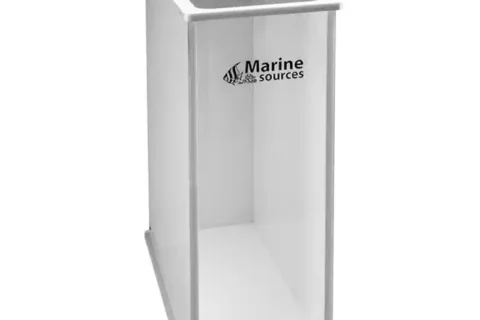
Recommended equipment
Hardware that prevents, monitors, or treats this condition — listed with the most important first.
Monitoring
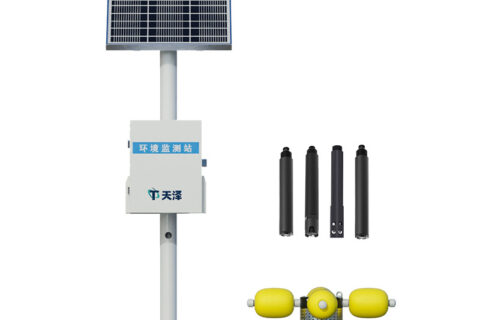
Water Quality Sensor Hub
Multi-parameter disease prevention
from $200–$5000
View details →
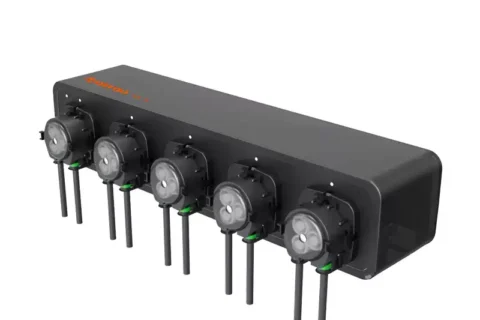
Feeding Systems
Automatic Fish Feeder
Overfeeding, starvation, maintenance
from $20–$100
View details →Prevention
Quarantine all new fish for at least 4 weeks. Maintain stable water parameters and dedicated equipment per tank. Watch the system closely during Any tropical aquarium temperature temperature windows.
Frequently asked questions
Is Hole-in-the-head disease the same as HITH?
Yes. HITH and Hole-in-the-head disease refer to the same condition caused by *Hexamita spp., Spironucleus spp. (with often secondary nutritional/environmental factors)*. The naming inconsistency comes from regional usage and the difference between traditional fishkeeping vocabulary and modern microbiology terms.
How long does Hole-in-the-head disease take to develop after exposure?
Incubation varies with temperature, pathogen load, and host condition. Most cases show first signs within 3–14 days of exposure. That's why a 4-week quarantine of new arrivals catches most introductions before they reach your display.
Can it spread to my other tanks?
Yes — through any shared equipment, water, or hands. Dedicated nets, siphons, and buckets per tank are the single most cost-effective prevention measure. If you've used one set of gear across multiple tanks, treat all of them as potentially exposed and observe closely for the next 30 days.
What's the best way to confirm I'm seeing it correctly?
Photograph the affected fish straight-on against the glass with the tank lights bright, take a close-up of any lesion, and compare against the reference image gallery on this page. If you're still uncertain after photographing, use the [Symptom Checker](/symptoms/) — picking three or four observable signs is more diagnostic than any single one.